

8 Million HIV Patients Could Lose Care as U.S. Funding Programs Near a Dangerous Deadline

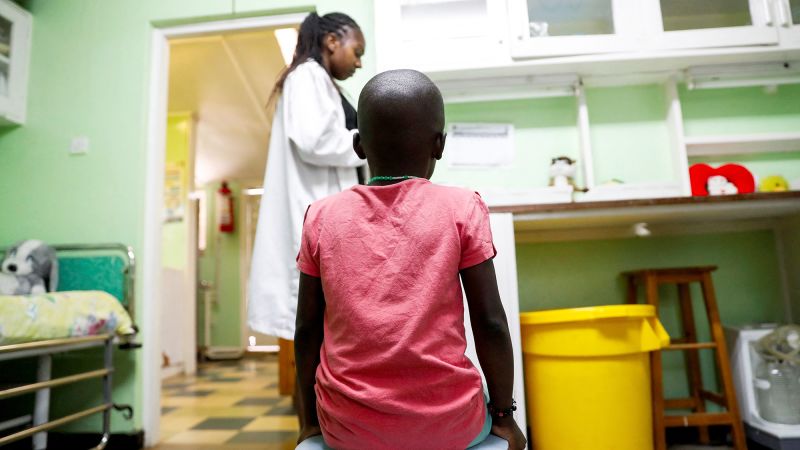
Every day, millions of people living with HIV — most of them in sub-Saharan Africa — rely on American-funded programs to stay alive. Those programs are now facing a critical deadline, and the safety net that has protected some of the world's most vulnerable families for more than two decades may be unraveling.
In September 2026, 120 funding awards that support HIV and AIDS work carried out by the U.S. Centers for Disease Control and Prevention (CDC) are scheduled to expire. No concrete replacement system is in place. That means more than 8.7 million patients worldwide — people who depend on these programs for medication, testing, and clinical care — are facing serious uncertainty about what comes next.
What Is PEPFAR and Why Does It Matter?
The programs at risk are part of the President's Emergency Plan for AIDS Relief, known as PEPFAR. Launched by the Bush administration in 2003, PEPFAR has become one of the most recognized humanitarian achievements in American history. It is credited with saving more than 26 million lives and preventing millions of new HIV infections, overwhelmingly in Africa.
For more than two decades, PEPFAR was jointly managed by the CDC, the U.S. Agency for International Development (USAID), and other agencies, with oversight from the State Department. The program funded everything from HIV testing in rural communities to laboratory services, medications that prevent mother-to-child transmission of the virus, and training for local health workers.
Many of these programs have been running continuously for 15 to 20 years. They are deeply woven into the fabric of healthcare systems in countries like Mozambique, Tanzania, and South Africa — nations that analysts say will be hit particularly hard if funding lapses.
A Restructure That's Raising Alarms
The Trump administration is in the process of shifting control of PEPFAR away from the CDC and USAID and consolidating it under the State Department, as part of what it calls the "America First Global Health Strategy." Internal State Department guidance obtained by CNN outlines a plan to streamline how U.S. global health assistance is delivered, replacing the existing multi-agency structure with a new system of one-on-one agreements — called Memoranda of Understanding (MOUs) — directly between the United States and individual partner countries.
Under the new model, partner countries would choose from a "menu" of services and pay for specific CDC functions, effectively turning the U.S. health agency into a contractor rather than a leading partner in fighting the epidemic.
A recent analysis by the Health Security Policy Academy, a U.S.-based think tank, found that the 120 CDC-managed awards are expected to end within weeks, with no replacement mechanisms ready to take over. The analysis warned starkly: "The result could be a second global health woodchipper: the abrupt destruction of operating systems that patients, clinics, health workers, laboratories, and ministries of health still depend on."
One CDC official, who was not authorized to speak publicly, described the situation in stark terms.
"It really does feel like the end of PEPFAR. In a lot of cases, the State Department mechanism is not set up yet. So, this isn't handing it from one set of experts to another — this is taking it away from one set of experts and putting it in a big box with a question mark."
The same official noted that the administration's intentions regarding long-term funding have been made clear internally: "Trump administration political appointees have been pretty clear the overall funding is going way down," they said, adding that for the parts of the program the administration does want to preserve, "it's really just for one or two more years, and then they've already told some of the countries we're pulling the plug."
What the Administration Says
The State Department disputes the characterization that these changes will harm global health programs. A State Department spokesperson told CNN: "The State Department expects CDC overseas operating funding to increase — not decrease — under the America First Global Health Strategy."
The spokesperson added: "The Trump Administration is preserving and strengthening PEPFAR's lifesaving impact, maintaining CDC's world-class technical role, and ensuring US assistance is producing durable results." The department says each recipient country is working through implementation plans for the new MOU agreements and that the CDC remains "the preferred provider for all technical services to recipient countries."
A spokesperson for the Department of Health and Human Services, which oversees the CDC, also pushed back on concerns, saying: "The suggestion that the America First Global Health Strategy will 'deteriorate' global health programs ignores decades of CDC's work to build sustainable public health capacity around the world," and that "CDC continues to implement global health programs funded through Congressional appropriations."
Experts and Former Officials Sound the Alarm
Despite the administration's assurances, concern is widespread — and it crosses party lines.
In May, eight former CDC directors published an essay in the health news outlet Stat, warning that the State Department's strategy, "done in haste as currently planned… will destroy PEPFAR and undermine health security around the world and in our own country." They cautioned that the new fee-for-services menu "risks pulling out the scaffolding and expertise" of the program before any viable alternative is ready, and called on the State Department, CDC, and Congress to develop a more stable transition plan together.
A bipartisan group of 23 U.S. senators, led by Sen. Raphael Warnock (D-GA) and Sen. Bill Cassidy (R-LA), sent a letter to the Senate Appropriations Committee urging increased direct funding for CDC's global health work. The senators wrote that "while we must be conscientious stewards of taxpayer dollars spent on foreign assistance, PEPFAR is one of the most cost-effective foreign assistance programs, delivering an immense return on investment."
Dr. Michele Montandon, the former leader of the CDC team focused on preventing mother-to-child HIV transmission — who was laid off last year — described what she sees as a fundamental shift in how the U.S. is approaching global health.
"A real challenge with this proposal is that it's really viewing global HIV work and global health-response work as transactional, as part of these MOU deals. There's really a lack of focus on health outcomes, saving lives, keeping Americans safe."
Montandon also raised concerns about whether the new system will maintain the rigorous data collection and accountability that have long been central to PEPFAR's effectiveness.
"When you require countries to meet certain indicators, we know that people are more likely (to) tell you what you want to hear. And so you need a lot of data quality systems in place, and site visits, and oversight to make sure that the data are accurate."
On the immediate risk to patients as the September deadline approaches, Montandon was direct: "It's really hard to transition the support for 8 million people in a couple months' time without having major disruptions… When people lose their access to treatment, they get sick with AIDS. Babies get HIV. People die."
The CDC official echoed that concern, noting that despite internal efforts for years to make PEPFAR more efficient and to strengthen the role of partner governments, the current restructuring is having the opposite effect.
"The irony is, we're actually moving backwards. We're getting far less per dollar than we were two years ago because of these changes."